
What Is a Porcelain Bridge? The Solution for Missing Teeth
Missing a tooth can affect more than your smile. It may make chewing uncomfortable, create spaces where food gets trapped, and change how confident you feel when speaking or smiling.
A porcelain bridge is one of the most common missing teeth solutions available today. It fills the empty space with a natural-looking replacement tooth and stays fixed in place, so you do not have to remove it every day.
At Champion Dentistry, patients in Philadelphia can explore dental bridges and other teeth restoration options based on their individual oral health needs.
Quick Answer: What Is a Porcelain Bridge?
A porcelain bridge is a fixed dental prosthetic used to replace one or more missing teeth.
The replacement tooth sits in the empty space and is supported by nearby teeth or, in some cases, dental implants. Porcelain is often used because it can closely match the color and appearance of natural teeth.
According to the American Dental Association, a dental bridge is designed to replace missing teeth by bridging the gap between existing teeth.
Key Takeaways
A porcelain bridge can replace one or more missing teeth.
It stays fixed in your mouth instead of being removed daily.
Porcelain can provide a natural-looking appearance.
Dental bridges can help restore chewing and speaking ability.
Traditional bridges normally use nearby teeth for support.
Dental implants and dentures are other possible missing teeth solutions.
The right treatment depends on your teeth, gums, bite, and overall oral health.
How Does a Porcelain Dental Bridge Work?
A dental bridge works by filling the gap left by a missing tooth.
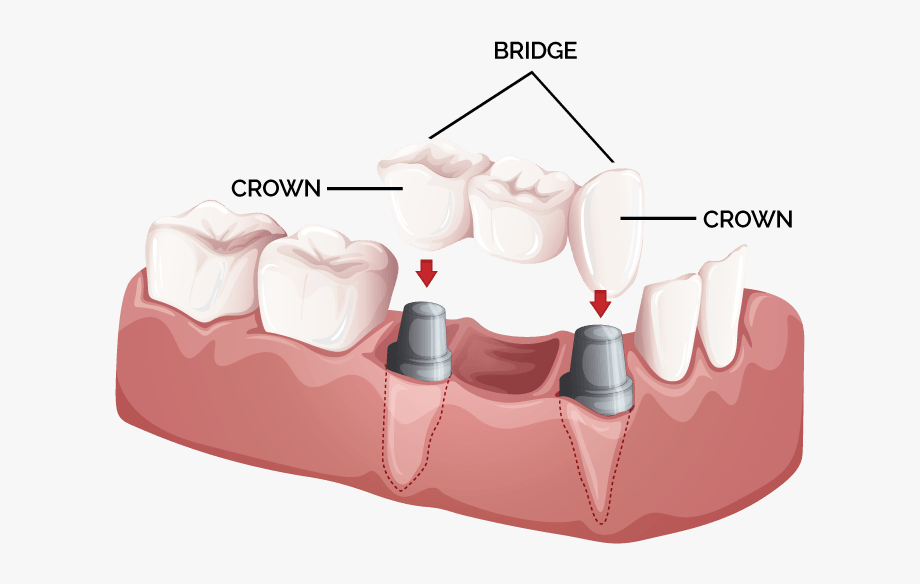
The artificial tooth in the middle is called a pontic, while the teeth that support the bridge are called abutment teeth.
With a traditional bridge, the teeth on both sides of the gap are usually prepared for dental crowns. These crowns hold the replacement tooth securely between them.
This creates a fixed restoration that looks and functions more like your natural teeth.
You can learn more about prosthodontic services at Champion Dentistry.
Why Choose Porcelain for a Dental Bridge?
Porcelain is widely used in restorative dentistry because of its natural appearance.
A dentist can match the shade of the bridge with your surrounding teeth, which helps the restoration blend into your smile.
Porcelain bridges may be especially appealing when the missing tooth is in a visible area.
However, not every bridge is made entirely from porcelain. Depending on the location of the missing tooth and the amount of chewing pressure involved, your dentist may recommend a different material or a combination of materials.
What Problems Can Missing Teeth Cause?
Missing teeth are not always just a cosmetic concern.
Depending on where the gap is located, tooth loss may affect:
Chewing
A missing tooth can make it harder to chew certain foods comfortably, especially if several teeth are missing.
Speech
Some missing teeth, particularly front teeth, can affect how certain words and sounds are pronounced.
Your Smile
Visible gaps may make some people feel less confident about their appearance.
Tooth Position
Teeth around an empty space may gradually shift, which can affect the way your upper and lower teeth come together.
Replacing the missing tooth can help restore a more complete smile and improve everyday function.
What Types of Dental Bridges Are Available?
There are several types of dental bridges, and each one works slightly differently.
Traditional Dental Bridge
A traditional bridge is one of the most common options.
It normally uses crowns placed over the natural teeth on both sides of the missing tooth.
The replacement tooth is attached between those crowns.
Cantilever Bridge
A cantilever bridge is supported by a tooth on only one side of the gap.
It may be suitable in certain areas of the mouth, although it is not appropriate for every patient.
Maryland Bridge
A Maryland bridge usually uses small wings that attach to the back of neighboring teeth.
Because it requires less preparation of nearby teeth, it may be considered in selected cases.
Implant-Supported Bridge
An implant-supported bridge uses dental implants rather than natural teeth for support.
This may be an option when several teeth are missing.
Champion Dentistry also offers information about dental implants for patients comparing different tooth replacement options.
Porcelain Bridge vs Dental Implant
Both treatments can replace a missing tooth, but they work differently.
| Porcelain Bridge | Dental Implant |
|---|---|
| Supported by nearby teeth | Supported by an implant in the jaw |
| Usually does not require implant surgery | Requires surgical implant placement |
| Nearby teeth may need crowns | Nearby teeth usually remain untouched |
| Fixed in the mouth | Fixed in the mouth |
| Often completed faster than implant treatment | Treatment may take several months |
| Neither option is automatically better. | |
A dental bridge may make sense when the surrounding teeth already need crowns, while an implant may be preferred when healthy neighboring teeth should be preserved.
Your dentist can help determine which option better fits your oral health, budget, and treatment goals.
What Happens During a Porcelain Bridge Procedure?
The exact process depends on the type of bridge, but a traditional bridge usually involves a few main steps.
Dental Examination
Your dentist first checks the missing tooth area, nearby teeth, gums, and bite.
X-rays or other diagnostic tools may also be used when necessary.
Preparing the Supporting Teeth
The nearby teeth are shaped so crowns can fit over them.
This creates the support needed for the bridge.
Creating Your Bridge
Impressions or digital scans are taken so the restoration can be made to fit your mouth.
The color of the porcelain can also be selected to match your surrounding teeth.
Placing the Final Bridge
Once the bridge is ready, your dentist checks its fit, appearance, and bite before securing it in place.
How Long Does a Porcelain Bridge Last?
Dental bridges can last for many years, but their lifespan depends on how well they are cared for.
According to Cleveland Clinic, dental bridges commonly last around 5 to 15 years, and some may last longer.
Good oral hygiene can make an important difference.
Brush twice a day, clean underneath the bridge, attend regular dental checkups, and avoid habits that place unnecessary pressure on the restoration.
How Do You Clean Under a Dental Bridge?
Cleaning underneath a bridge is important because food and plaque can collect around the replacement tooth and supporting teeth.
Your dentist may recommend:
Floss threaders
Interdental brushes
Water flossers
Regular dental floss with a bridge-cleaning technique
Daily cleaning helps protect the supporting teeth and gums.
Routine checkups and professional cleanings are also important.
Is a Porcelain Bridge Right for You?
A porcelain bridge may be an option if you have one or more missing teeth and healthy teeth available to support the restoration.
However, your dentist will usually consider several factors first, including:
The number of missing teeth
Health of the surrounding teeth
Gum health
Your bite
Bone support
Oral hygiene habits
Location of the missing tooth
Some patients may be better suited for dental implants, partial dentures, or another type of teeth restoration.
Porcelain Bridges for Missing Teeth in Philadelphia
Philadelphia is known for its historic neighborhoods, strong community identity, iconic architecture, museums, universities, food culture, and the unique character of areas such as Center City, West Philadelphia, University City, and surrounding residential communities. Local residents often value businesses that are easy to reach and provide personalized service close to home. Dental practices such as Champion Dentistry support Philadelphia families by offering preventive, restorative, cosmetic, and prosthodontic dental care within the local community. For people dealing with missing teeth, having access to a nearby dentist can make consultations, follow-up appointments, routine cleanings, and long-term maintenance of dental bridges much more convenient.
Dental Bridges and Teeth Restoration at Champion Dentistry
Choosing the right treatment for a missing tooth begins with understanding why the tooth was lost and what condition the surrounding teeth are in.
Champion Dentistry provides several restorative and prosthodontic treatments, including dental bridges, crowns, dentures, and dental implants.
This allows patients to compare different missing teeth solutions instead of relying on a one-size-fits-all treatment.
Explore Champion Dentistry's prosthodontic services or contact Champion Dentistry to schedule an evaluation.
Restore Your Smile With the Right Missing Teeth Solution
A porcelain bridge can provide a practical and natural-looking solution when one or more teeth are missing, helping restore the appearance and function of your smile without requiring a removable appliance.
The right option, however, depends on your individual dental health.
If you are considering a porcelain bridge, dental implant, or another teeth restoration option in Philadelphia, contact Champion Dentistry to discuss which treatment may work best for you.
Frequently Asked Questions About Porcelain Bridges
-
A porcelain bridge is a fixed dental restoration that replaces a missing tooth using an artificial tooth supported by nearby teeth or dental implants. Porcelain helps give the restoration a natural-looking appearance.
Learn more from the American Dental Association.
-
A porcelain bridge is considered fixed because you do not remove it every day like a partial denture. However, it may eventually need repair or replacement after years of use.
-
Many dental bridges last approximately 5 to 15 years, although good oral hygiene and regular dental visits may help them last longer.
You can read more about bridge longevity from Cleveland Clinic.
-
Yes. Replacing a single missing tooth is one of the most common uses of a traditional dental bridge.
-
Yes, some dental bridges can replace several missing teeth, depending on how much support is available and where the missing teeth are located.
-
Porcelain can be matched to the shade and shape of nearby teeth, which helps the bridge blend naturally into the smile.
-
It depends on your oral health and treatment goals. Bridges use nearby teeth for support, while dental implants are supported by the jawbone.
Read more about dental implants at Champion Dentistry.
-
The supporting teeth are normally prepared while the area is numbed, so patients should not feel the preparation itself. Mild sensitivity may occur afterward.
-
The cost of a porcelain bridge varies depending on the number of missing teeth, bridge type, materials used, treatment complexity, and insurance coverage.
A dental consultation is the best way to receive an accurate estimate.
-
Special floss, floss threaders, interdental brushes, or water flossers can help clean underneath the artificial tooth and around the supporting teeth.
-
Food particles can collect underneath a bridge if the area is not cleaned properly, which is why daily flossing and bridge-specific cleaning are important.
-
Dental bridges, implants, and removable partial dentures are all common missing teeth solutions.
The best option depends on the condition of your gums, supporting teeth, bone, bite, and personal treatment goals.
-
Patients looking for dental bridges in Philadelphia can visit Champion Dentistry for an evaluation and personalized restorative treatment plan.
View Champion Dentistry's dental services or schedule a consultation.